Leather Jacket Lining Guide: 6 Materials and How to Choose

A leather jacket’s outer shell gets most of the attention, but the lining can make a major difference in comfort, warmth, weight, and everyday wear. The right leather jacket lining helps the jacket slide over your clothes, supports the inside construction, and can add insulation when temperatures drop.
When shopping in the USA, think about the climate, how you plan to wear the jacket, and the amount of layering you normally use. A lightweight lining can suit mild weather, while a quilted or shearling interior is more appropriate when warmth is a priority.
Why Leather Jacket Lining Matters
The lining is the material attached to the inside of the jacket. It creates a smoother surface between your body or base layer and the leather, making the jacket easier to put on and take off. Depending on its construction, the lining can also affect warmth, breathability, weight, and how the jacket hangs.
Lining should be considered alongside the leather itself. A lightweight fashion jacket and a cold-weather shearling jacket have different jobs, so they do not need the same interior construction.
Common Leather Jacket Lining Materials
Polyester
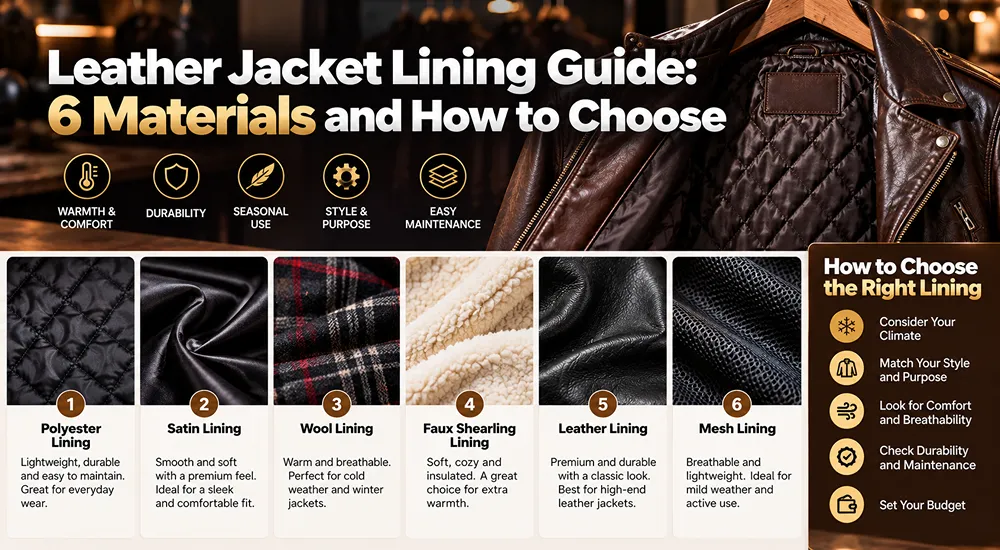
Polyester is common in everyday leather jackets because it is lightweight, durable, and relatively easy to maintain. A smooth polyester lining can also make it easier to layer the jacket over shirts and knitwear. Its performance depends on the fabric construction and jacket design, so the label alone does not determine how warm a jacket will feel.
Cotton
Cotton can provide a soft, natural feel and is useful when comfort and airflow are more important than heavy insulation. It can work well for lighter jackets and mild-weather wear. Cotton may also absorb more moisture than synthetic lining fabrics, so the care instructions matter.
Viscose or Rayon
Viscose and rayon are smooth lining fabrics that can feel soft against clothing. They are often chosen when a jacket needs an easy-sliding interior with a more refined feel. As with other lining materials, the final performance depends on the fabric weight and the jacket’s overall construction.
Satin
Satin has a smooth surface that makes a leather jacket easy to slip over other garments. It is commonly associated with dressier or fashion-focused jackets. Satin describes a type of fabric finish rather than one single fiber, so the actual composition can vary.
Quilted Lining
Quilted lining combines an outer lining fabric with a layer of padding or insulation. This construction can add warmth and a slightly fuller feel, making it useful for fall and winter jackets. The extra bulk should be considered when choosing a size, especially if you plan to wear thick layers underneath.
Shearling
Shearling provides a substantially different interior because the wool or fleece layer contributes insulation as well as texture. It is commonly used in aviator and B3-style jackets intended for colder conditions. Because shearling adds volume, these jackets can fit differently from lightweight leather styles.
How to Choose the Right Leather Jacket Lining
- Consider your climate: Lightweight linings suit mild conditions, while insulated interiors are more useful for cold weather.
- Think about layering: If you regularly wear sweaters, leave enough room for comfortable movement.
- Check the jacket weight: Thicker insulation can make a jacket feel heavier and more substantial.
- Match the purpose: Everyday fashion, motorcycle use, travel, and winter wear can call for different interior construction.
- Read the care label: Follow the manufacturer’s cleaning and storage instructions for both the leather and lining.
Leather Jacket Lining by Jacket Style
A lightweight men’s leather jacket may use a smooth, lighter lining for everyday wear. A women’s lambskin jacket can also benefit from a soft, lightweight interior that preserves its flexible feel. For colder weather, aviator jackets with shearling or other insulation provide a different balance of warmth and structure.
The best lining is therefore not a universal “best.” It is the one that fits the jacket’s purpose, your climate, and the way you expect to wear it.
Leather Jacket Lining FAQ
What is the best lining for a leather jacket?
There is no single best lining for every jacket. Polyester can be practical for everyday use, cotton can suit lighter styles, satin and viscose can provide a smooth feel, while quilted and shearling interiors are useful when warmth is important.
Does a leather jacket lining affect warmth?
Yes. The lining fabric, its weight, and any insulation inside it can all affect how warm the jacket feels. The leather shell and overall construction also matter.
Can you replace a leather jacket lining?
In many cases, a worn lining can be replaced by a qualified leather or garment repair professional. The correct replacement depends on the jacket’s construction, intended use, and desired fit.
Before buying a leather jacket, look beyond the outer leather. Check the lining material, insulation, weight, and room for layers. Matching those details to your climate and intended use can make the jacket more comfortable and practical throughout the season.