
Custom Leather Jackets in 2026: Fit, Design & Buying Guide

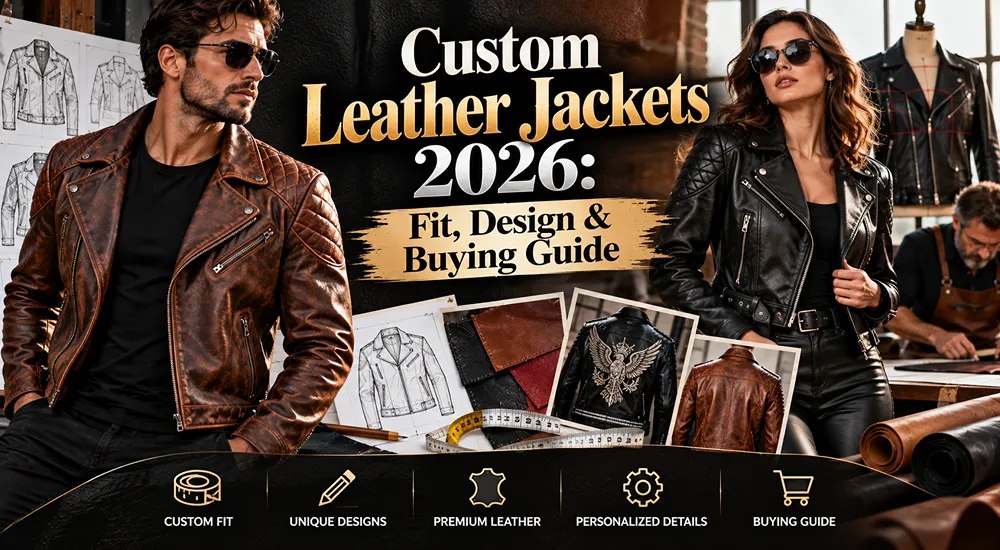
Custom leather jackets are becoming more relevant in 2026 because shoppers no longer have to accept a standard fit, color, or finish. A made-to-order jacket can be shaped around your measurements and personal style, from the leather type and silhouette to the hardware, lining, pockets, and small finishing details. The result should not simply look unique; it should feel comfortable and make sense for the way you actually dress.
Current leather-jacket styling is leaning toward relaxed bombers, oversized bikers, textured finishes, distressed looks, and richer colors. Customization gives you a practical way to use those ideas without copying a trend exactly. You can keep the details you like, adjust the fit, and build a jacket you will still want to wear after the season changes.
What Is a Custom Leather Jacket?
A custom leather jacket is made with selected specifications rather than purchased exactly as a standard ready-to-wear design. Depending on the order, you may be able to choose the jacket style, measurements, leather, color, lining, zipper finish, pockets, collar, cuffs, embroidery, patches, or other design details.
“Custom,” “made-to-measure,” and “bespoke” are sometimes used as if they mean the same thing. In practice, made-to-measure usually starts with an existing pattern that is adjusted to your measurements, while a fully bespoke jacket can involve a more individual pattern and design process. Before ordering, ask exactly what the maker will customize.
Why Choose a Custom Leather Jacket in 2026?
A fit built around your measurements
Fit is one of the strongest reasons to go custom. Standard sizes are designed around averages, so the chest may fit while the sleeves feel too long, or the shoulders may be right while the waist feels loose. Supplying accurate measurements allows the maker to balance these areas more closely.
More control over the design
Custom does not have to mean flashy. You might simply want a clean black café racer with longer sleeves, a brown bomber with a specific lining, or a biker jacket with less hardware. On the other hand, embroidery, patches, contrasting panels, studs, fringe, printed artwork, and personalized details can create a stronger statement when that suits your style.
A jacket that works with your wardrobe
Instead of choosing a color because it looks good in one photo, think about what you already wear. Black works easily with monochrome outfits and dark denim. Brown and tan pair naturally with blue jeans, boots, and earth tones. Burgundy can add color without feeling overly bright. A custom order lets you make that decision before the jacket is cut.
Custom Leather Jacket Styles Worth Considering
Custom biker jackets
Biker jackets remain one of the most recognizable leather silhouettes. You can customize the lapels, zipper layout, belt, pockets, cuffs, and hardware finish. For a cleaner everyday version, reduce unnecessary metal details. For a stronger moto look, keep the asymmetric front and more visible hardware.
Custom leather bomber jackets
Bombers work well for people who prefer a relaxed shape and easy layering. In 2026, softer and roomier leather silhouettes continue to feel current. Consider the ribbing, collar style, jacket length, pocket layout, and how much space you need underneath for a sweatshirt or knit.
Custom café racer jackets
A café racer is a good option if you want a minimal jacket with a streamlined front. A band collar, simple zipper, and restrained pockets make the leather and fit the main focus. Black and dark brown are versatile choices, but a custom color can make the design more personal without adding extra decoration.
Custom Western and fringe leather jackets
Western details can be customized through fringe length, yoke shape, leather color, embroidery, and decorative panels. If you want a jacket for regular wear, keep the fringe placement focused. If the goal is a statement piece for concerts, events, or Western styling, longer fringe and more detailed panels can make sense.
How to Design a Custom Leather Jacket Step by Step
- Choose the silhouette first. Decide whether you want a biker, bomber, café racer, trucker, Western, blazer, or another leather style.
- Choose the leather. Ask what hide and finish will be used. Lambskin can feel soft and lightweight, while cowhide is generally firmer and more substantial. Suede is also leather, but its napped surface requires different care.
- Select the color. Think about versatility as well as appearance. If the jacket will be worn often, compare the color with your usual jeans, trousers, shoes, and shirts.
- Provide accurate measurements. Chest, shoulders, sleeves, waist, and jacket length can all affect the finished fit. Follow the maker’s measurement method rather than guessing from your usual size.
- Confirm functional details. Decide on pocket placement, closure, collar, cuffs, lining, and hardware. These details affect everyday usability, not just appearance.
- Add personalization last. Embroidery, initials, patches, artwork, fringe, or other decorative elements should support the overall design rather than overwhelm it.
If you are unsure about sizing, use our leather jacket measurement guide before submitting your measurements.
How to Choose the Right Leather
Do not choose leather only by thickness or price. Consider how you want the jacket to feel and age. Lambskin is commonly chosen for a softer hand and easier drape. Cowhide is often preferred when a firmer, more rugged feel is wanted. Goatskin can offer a balance of durability and flexibility, while suede gives a softer, textured appearance.
Ask the seller to state the actual leather type rather than relying on vague terms such as “leather feel” or “premium material.” If genuine leather is important to you, confirm the outer-shell material in writing before approving the order. This guide is focused on leather jackets only, not faux-leather alternatives.
Custom Fit: Measurements That Matter Most
A custom jacket can only be as accurate as the information used to make it. Measure carefully and follow the maker’s instructions. Shoulder width affects how the whole jacket hangs. Chest and waist measurements determine the body shape. Sleeve length affects both comfort and proportion, while back or jacket length changes the overall silhouette.
Also tell the maker how you plan to wear the jacket. A close-fitting café racer worn over a T-shirt needs different ease from a bomber intended to layer over winter knitwear. Do not deliberately add inches unless the maker asks you to; explain the desired fit instead.
Personalization Ideas That Stay Wearable
Personalization works best when it has a purpose. Initials inside the lining can make a jacket personal without changing its exterior. A small embroidered mark, contrast lining, custom zipper pull, or subtle patch can add identity while keeping the jacket versatile.
Large back artwork, extensive studs, fringe, or multiple patches create a much stronger look. These details can be excellent for a statement jacket, but approve the size and placement before production. Stitching and punching leather can leave permanent holes, so changes may not be simple once work begins.
Custom vs. Ready-to-Wear Leather Jackets
Ready-to-wear makes sense when a standard size fits you well and you already like the available design. Custom becomes more useful when you need fit adjustments, want a particular combination of leather and color, or cannot find the details you want in one jacket.
The main trade-off is planning. A custom order requires accurate measurements and clear design decisions, and it can take longer to produce than an in-stock jacket. Review every specification before approving the order.
Explore Custom Leather Jackets at The Creative Leather
The Creative Leather offers made-to-measure and custom leather options for men and women, including different colors, designs, patterns, and fit adjustments. Start with our custom leather jacket options, or use an existing silhouette as inspiration, such as a custom café racer leather jacket or a custom men’s biker jacket.
When requesting a custom design, send clear reference images where appropriate, describe the features you want, and provide measurements using the requested method. Confirm the final leather, color, fit, hardware, and personalization details before production.
How to Care for a Custom Leather Jacket
Care depends on the leather finish. Keep the jacket away from prolonged moisture and direct heat, use a wide hanger, and avoid crushing it under heavier clothing. Smooth leather and suede require different cleaning products, so always use a product intended for the specific material and test it in a hidden area first.
For detailed maintenance advice, see our leather jacket care guide.
Frequently Asked Questions
What can I customize on a leather jacket?
Depending on the maker, you may be able to customize the fit, leather type, color, lining, pockets, collar, cuffs, zippers, hardware, embroidery, patches, fringe, and other design details.
Is a custom leather jacket the same as bespoke?
Not always. Custom can describe many levels of personalization. Made-to-measure often adjusts an existing pattern, while bespoke may involve creating a more individual pattern and design. Ask the maker what its service includes.
Which leather is best for a custom jacket?
There is no single best choice. Lambskin suits softer, lighter jackets; cowhide works well for a firmer, rugged feel; goatskin can balance flexibility and durability; and suede offers a distinctive textured finish.
How should I measure for a custom leather jacket?
Follow the maker’s specific instructions for chest, shoulders, waist, sleeves, and jacket length. If possible, compare the measurements with a jacket that already fits you well.
Can I add a logo, name, or artwork?
Many custom makers offer embroidery, patches, printing, or other personalization. Use artwork and logos you have permission to reproduce, and approve the size and placement before production.
Final Takeaway
A custom leather jacket should solve more than one problem. It should fit well, match your wardrobe, use the leather and details you actually want, and feel personal without sacrificing wearability. Start with the silhouette and measurements, then choose the leather, color, hardware, and finishing details. A clear design brief makes it easier to turn a trend or idea into a leather jacket that feels like your own.